
Sledging: Choosing a Run and Staying Safe
Sledging can be a family activity on a prepared hill or a faster ride on a longer run. Choose a route that matches everyone’s experience, the snow and the operator’s current status. Beginners should start on a short, gentle slope.
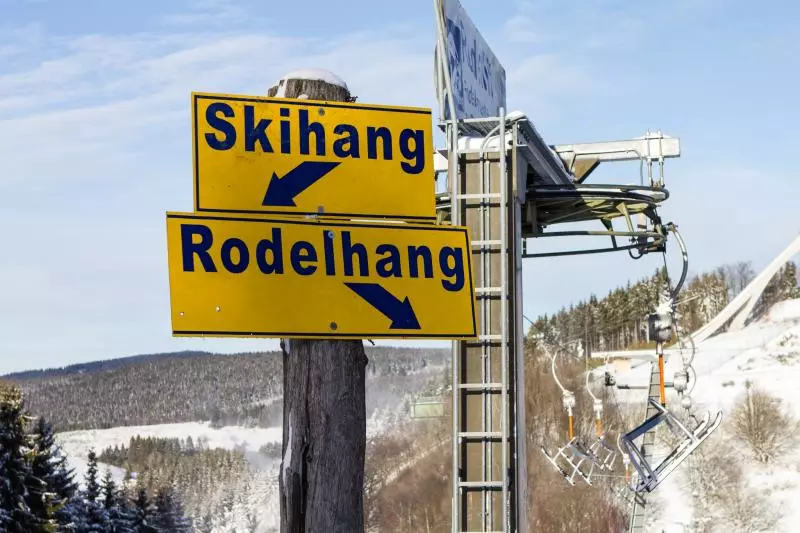 A snow-covered sledging run in the Winterberg winter sports area.
Photo: Dago Wiedamann
A snow-covered sledging run in the Winterberg winter sports area.
Photo: Dago Wiedamann
Choose and use a suitable run
Recreational sledging is different from organised luge racing, which uses specialised tracks and equipment. On a public sledging run, follow the permitted direction, check the turns and stopping area, and leave enough space between riders. Do not stop in blind corners or sit in the middle of the route after a fall.
Children need a run with a suitable length and gradient, plus the supervision required by the operator. Check the local rules before starting and never use a closed route.
Check your sledge and clothing
Use a sledge you can steer and stop. Before riding, inspect the seat, runners and controls; do not use damaged equipment. Wear warm, water-resistant clothing, sturdy footwear, gloves and a helmet. On icy snow, stopping distance can increase.
Weather and safety
Check the operator’s updates on snow, closures and visibility. Do not ride when the run is closed, visibility is poor or ice makes stopping unsafe. Keep a safe distance and obey barriers. After a fall, move to a safe place; contact local help if someone is injured.
Frequently asked questions
Which sledge is suitable for a family?
Choose a controllable sledge with brakes that suits the riders and the run. The operator may restrict certain types.
Should children wear a helmet?
A helmet is sensible protection, especially on faster or steeper runs. Follow age guidance and local rules.
When should we avoid sledging?
Do not ride a closed run or go out when visibility is poor, ice is dangerous or there is too little snow.
