
Ice Fishing on a Winter Holiday
Ice fishing combines a peaceful time on the ice with the experience of nature and the practicalities of winter angling. For travelers, a guided outing is usually the best way to get started: a local operator explains how it works, provides an ice auger and fishing gear depending on the package, and decides whether the ice is currently safe to use. Before booking, check which services are included and what rules apply at the waterway.
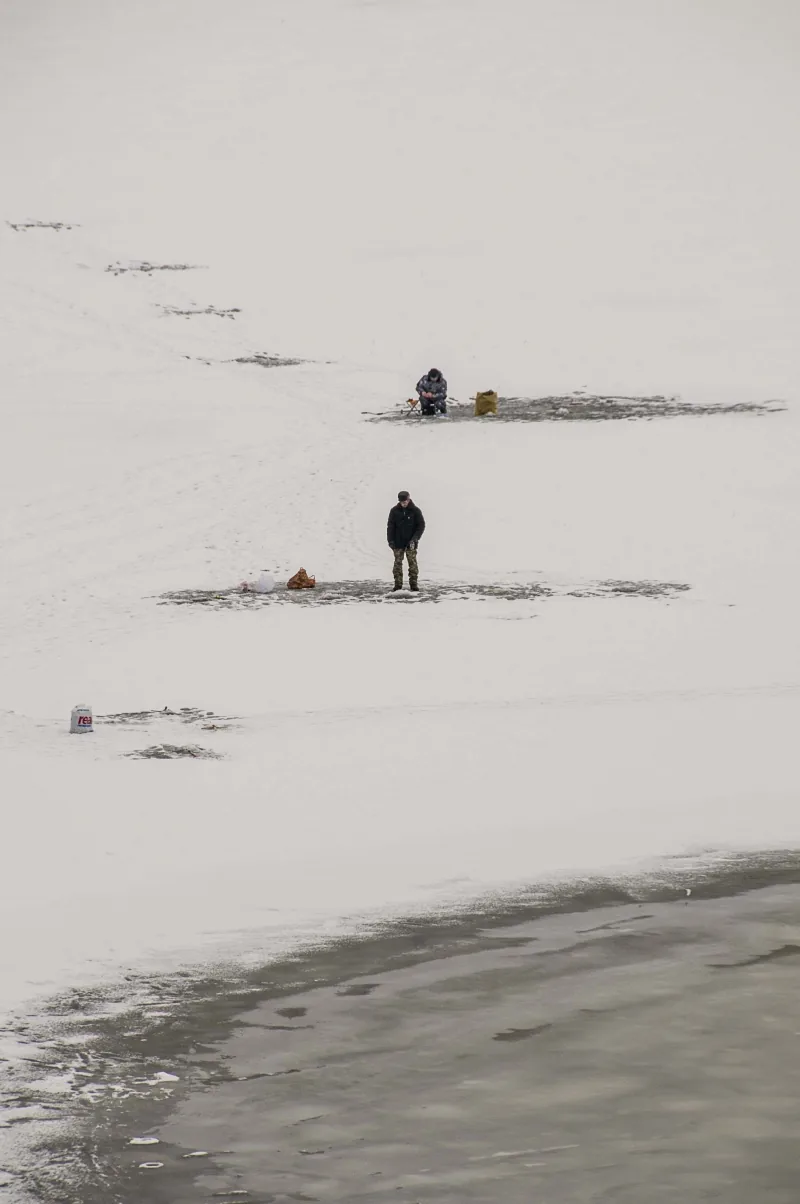 Eisangeln auf der vereisten Wolga in der Region Saratow.
Photo: Alesia Belaya
Key facts
- Ice fishing takes place on ice that has been officially opened or professionally assessed.
- Ice strength depends on its structure, the weather, currents, and measurements taken at multiple points.
- Warm, dry clothing matters more than spending a long time outdoors.
- Fishing rules, permits, closed seasons, and permitted equipment vary from one waterway to another.
- A guide can help with the briefing, equipment, choosing a location, and stopping the outing if conditions become unsafe.
How ice fishing works
At the start, you will be briefed and will only enter the area approved by the operator. A suitable ice auger is used to drill a hole, then the fishing line is lowered with the prescribed rig. Depending on the region, the focus may be on different fish species, bait, and fishing methods. Ask in advance whether you can keep your catch, whether a permit is required, and how undersized or protected fish must be handled.
A good package specifies the meeting point, duration, group size, supervision, and cancellation terms. Some tours combine fishing with hot drinks, a meal, or a heated place to rest. If you are on a ski holiday, it is easier to fit in a short session than a full day—but still allow time for travel, the briefing, and getting dressed and changed.
Equipment and clothing
You will often be standing still on the ice for a long time. Wear several dry layers, a wind- and water-resistant outer layer, warm socks, insulated boots, and gloves that let you handle small items securely. Spare gloves and a change of shirt are useful in wet weather. Sunglasses and sunscreen protect you from reflected light; a phone in a waterproof case, drinking water, and a snack should also go in your daypack.
Check whether the operator provides an ice auger, a seat, a fishing rod, bait, safety equipment, and a warm place to take a break. Use only the equipment provided, and do not adjust any safety gear without instructions. If you bring your own equipment, ask in advance whether it is suitable for the local method and applicable rules.
Safety on the ice
There is no single ice thickness that guarantees it is safe to go out. Finland’s official safety authority, Tukes, explains how to assess ice strength: its structure, layers, snow cover, water movement, and weather must all be taken into account. A single measurement is not enough to assess an entire area. During a thaw, rain, strong winds, visible cracks, or changing water levels, the operator must reassess conditions, postpone the outing, or cancel it.
Never venture onto unfamiliar ice on your own, and do not go alone. Stick to marked routes, keep the required distance, and follow instructions. Areas around inlets and outlets, springs, bridges, reeds, or currents may be weaker. Ask how the group will raise the alarm in an emergency, where rescue equipment is kept, and how far away the nearest safe exit is. If in doubt, do not go any farther and follow the guide’s decision.
Examples of destinations and fishing permits
Guided ice-fishing tours are available, for example, in Rovaniemi and Pyhä in Lapland, and on Lake Iso-Virmas near Hankasalmi in Finland’s Lakeland region. Packages vary: some operators provide equipment and warm clothing, while others specify only guiding and equipment. Check dates, inclusions, and seasonal availability directly with the operator. Booking a guided outing does not automatically give you permission to fish independently: for your own trips, you must check local fishing rights, permits, and waterway rules separately.
Useful starting points for winter sports on a winter holiday and ice sports and ice rinks can help you compare other activities for your trip. Ice rinks are not fishing waters; ice fishing is subject to the rules for the specific lake.
Waterways, rules, and planning
Before your trip, find out which lake you will visit and which local authority is responsible for it. Fishing permits, licenses, closed seasons, minimum sizes, and permitted fishing gear are set regionally. Travel insurance from another country does not replace a permit. Ask the operator to confirm which documents you need and whether the activity is accessible from your accommodation or ski resort.
Tell the operator about any health conditions, sensitivity to cold, and your experience. Children and people who are unsteady on slippery surfaces need appropriate supervision. Plan for a warm place to retreat to and bring dry clothing. Weather and ice conditions can change at short notice, so a flexible booking is a good idea.
FAQ
Is ice fishing suitable for beginners?
Yes, if you go with an experienced operator, receive a briefing, and use only approved areas. A short, supervised session is usually better for beginners than an outing on their own.
What should I wear?
Several dry, warm layers, windproof outerwear, warm socks, insulated boots, and gloves with a good grip. Spare clothes and sun protection are useful for longer outings.
Can I go out on a lake alone?
No. You should not venture onto unfamiliar ice alone. Follow current local approvals and, on a guided outing, stay in the designated area.
How is the safety of the ice checked?
The operator must assess the ice structure and strength at multiple relevant locations and repeat the checks. Weather, currents, and thawing can change the assessment.
Do I need a fishing license?
That depends on the waterway and region. Before booking, check the fishing license, permit, closed seasons, minimum sizes, and permitted equipment.
What happens if the weather is unsafe?
A responsible operator will postpone or end the tour if the ice, visibility, wind, or temperature makes it unsafe. Ask about the cancellation and refund policy.
