
Downhill skiing on a winter holiday: Equipment, rules and planning
Downhill skiing can add a sporty dimension to a winter holiday, but it calls for a realistic assessment of ability, conditions and available options. If you are trying it for the first time, plan a short session with instruction rather than an ambitious programme without preparation.
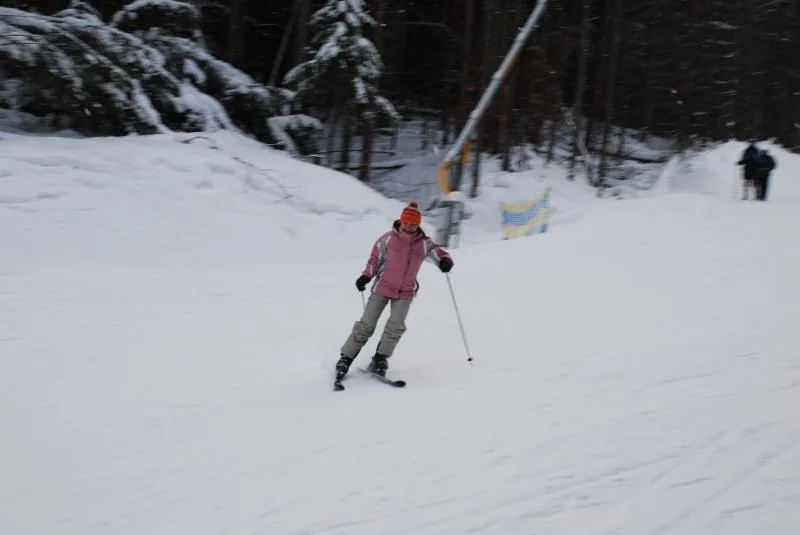 Skifahrer in pinker Jacke und orangefarbener Mütze fährt einen verschneiten Hang hinab.
Photo: Olga Buko
Skifahrer in pinker Jacke und orangefarbener Mütze fährt einen verschneiten Hang hinab.
Photo: Olga Buko
Understanding downhill skiing
Downhill skiing is alpine skiing on a slope. Skiers control their speed, turns and movement across the terrain using their skis; the challenges range from wide beginner slopes to steep, demanding runs. Your ability, visibility, snow conditions and the difficulty level of the open run all matter when choosing a slope. A red or black run does not become suitable just because it happens to look clear.
On the slopes, consideration for others and controlled skiing are essential. Anyone approaching from behind must choose a line that does not put others at risk. Look uphill and downhill when setting off, crossing or stopping; wherever possible, stop at the side, not behind a crest. Markers, closures, notices from the lift operator and the FIS rules of conduct provide the framework for a day on the slopes.
Choosing and preparing
Before booking or travelling, it is worth checking the specific resort: Is there a suitable area, a lesson, rental equipment or a supervised introduction? Opening hours, admission, minimum age, reservations, local rules and current operating status are set by the operator. General information from associations can help put things in context, but it does not replace local advice.
For families and groups, the programme should accommodate different ability levels. Having a meeting point away from the sports area avoids unnecessary searching. If you are combining several winter activities, allow time to rest and bring dry changes of clothes. Water, a small snack and a charged phone are useful for longer outings.
Equipment suited to your ability
Equipment must suit the sport, the area and your experience. Before setting off, check rental equipment for the right size and fit, working fasteners and visible damage. Warm, flexible clothing worn in several layers offers better protection than one very heavy layer. For outdoor activities, pack gloves, dry socks and a windproof outer layer. Protective gear such as a helmet, back, knee or wrist guards may be advisable or required, depending on the discipline and your ability.
Weather, exertion and safety
Snow, ice, wind, visibility and temperature can change over the course of a day. Before setting off, check the resort’s latest notices and, where relevant, weather or avalanche information. End the session if visibility is poor, you hear unusual noises, equipment is damaged or your concentration is waning. Beginners should choose clear, designated areas and increase the difficulty and duration only gradually. Children need clear rules, short sessions and adult supervision.
On shared areas, be considerate: follow the direction of travel, keep your distance and obey marked routes and closures. If you fall or notice an injury, move out of the way safely and get help. Outside secured areas, only people with the right experience and equipment, and a current assessment of the risks, should venture out.
A sensible plan for the day
It is best to begin the session with a quick check of the weather, opening status, equipment and meeting point. Then take it easy and warm up before increasing the duration or speed. Build breaks in between runs; do not try to overcome the cold or fatigue through sheer determination. At the end, check that everyone is back and that the equipment can be packed away dry and complete. This simple routine makes planning easier and leaves room to adapt if the weather changes.
Ski length, bindings, boots and poles should suit your ability, build and intended use. Have bindings professionally adjusted, fasten boots securely, and check the edges and bases. A helmet and suitable clothing help protect against the cold and falls. Beginners benefit from lessons and should practise on a clear slope before choosing longer or steeper runs.
Expert information and local checks
The International Ski and Snowboard Federation is the governing body for international skiing and snowboarding. Local slope rules, openings and closures are determined by the ski resort.
Frequently asked questions about downhill skiing
Which slope is suitable for beginners?
A wide, clear, open beginner slope with a gentle gradient. If you are unsure, a ski school can help assess your level.
Can you stop anywhere?
No. Stop at the side and only where you can be clearly seen from above. Narrow sections and crests are unsuitable.
What matters when the weather changes?
Reassess visibility, wind, snow and lift operations. An open run may later be closed or become more difficult to ski.
