
Cross-country skiing on your winter holiday: technique, equipment and safety
Cross-country skiing combines exercise with the experience of winter away from alpine downhill slopes. If you’re just starting out, choose between classic technique on parallel tracks and skating on the wide, specially groomed trail beside them. The key is to pick a suitable route, set a realistic pace and use equipment that matches your technique and ability.
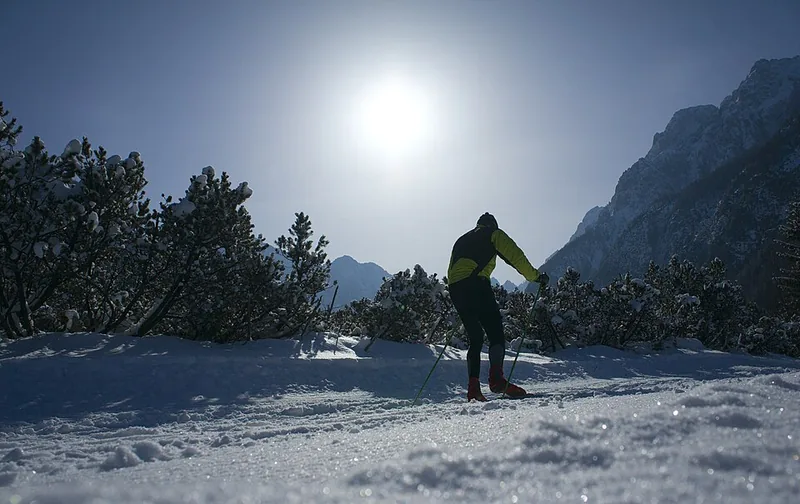 Skilangläufer bewegt sich mit Stöcken über eine verschneite Loipe.
Photo: Petar Milošević
Quick facts
- In classic skiing, you glide along the parallel tracks; skating uses the wide, smooth surface beside them.
- Skating technique involves pushing off to the side and shifting your weight from one ski to the other.
- Trails are marked according to difficulty and use; follow local signs and rules.
- For your first outing, choose a short, easy-to-follow loop on gentle terrain.
- On shared trails, be considerate, keep your speed under control and leave enough space.
- Grooming, opening status and snow conditions can change; check the latest local information when planning your day.
Classic technique or skating?
With classic technique, you glide forward by alternating between the parallel tracks. Skating is similar to ice skating: the skis point diagonally outward as you shift your weight from one ski to the other. You’ll need the wide skating lane; leave the classic tracks clear. Beginners benefit from an introductory lesson and an easy trail where they can practise balance, gliding and braking without feeling rushed. This makes it easier to choose from the different winter sports according to your experience and the kind of day you have planned.
Choose a suitable route and equipment
Choose your first route based on its marked difficulty, length and elevation gain. A short loop with an easy way back is a better choice for beginners than a long tour with several climbs. Classic and skating skis differ in length and design; boots, bindings and poles must also match your chosen technique. Choose equipment to suit your height, ability and conditions. The guidance on ski and snowboard equipment can help you prepare.
Trail etiquette and safety
Ski at a pace that lets you stop safely at any time, and keep your distance from those ahead. On trails with multiple tracks, generally keep to the right unless overtaking; when meeting other skiers, both sides should also keep right. Skaters should stay in the skating lane. Take breaks off the trail, and after a fall, move out of the tracks as soon as it is safe to do so. Follow trail markings rather than your own route ideas. The FIS rules for cross-country skiing also cover helping others and providing your personal details after an accident. More winter sports safety advice can help you prepare.
Plan your day on the trails
Trail status, weather and local guidance determine when and where it makes sense to set off. Bring suitable clothing, drinks and a charged phone; for longer routes, plan breaks and decide in advance where you’ll turn back. If visibility is poor, winds are strong, you’re tired or the snow feels unsafe, shorten your route or turn back. For competition rules and equipment requirements, consult the official FIS cross-country skiing documents.
