
Glacier Ski Areas in Transition
Glacier ski areas are set in a unique environment: ice, snow, crevasses, weather and altitude all shape how they operate. The retreat and changing condition of glaciers affect the terrain, routes and usable areas over the long term. For visitors, the operator’s day-to-day decisions also matter, because a glacier area is not a sports venue that stays the same year-round.
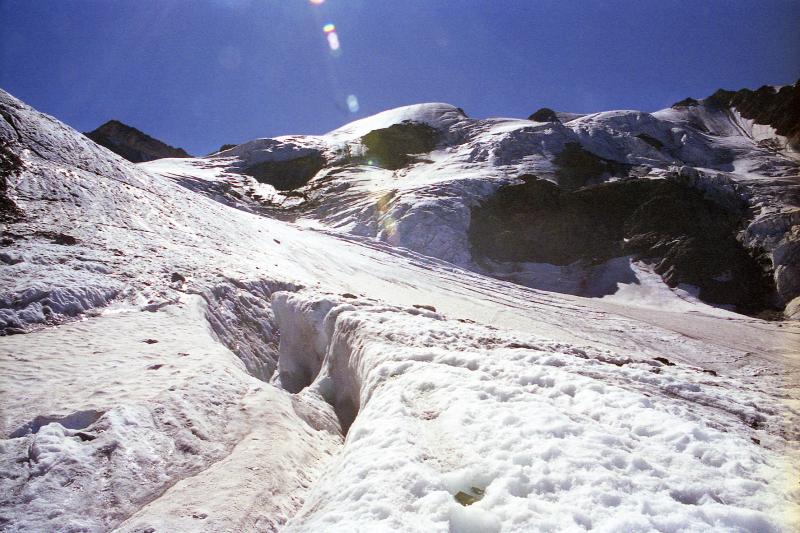 Schneebedeckter Gletscher mit Spalten und Eisformationen unter klarem blauem Himmel.
Photo: VinschgerEngl
Schneebedeckter Gletscher mit Spalten und Eisformationen unter klarem blauem Himmel.
Photo: VinschgerEngl
Why glaciers change
Glaciers respond to temperature, precipitation and the length of the cold season. Over time, changes become visible in their mass, length and surface. This can affect access routes, markers and the location of crevasses. The Swiss Glacier Monitoring Network GLAMOS provides long-term observations. These data describe developments, but do not guarantee that an area will be open, or that snow conditions or piste quality will be suitable on a particular day of your trip.
Altitude, cold and physical strain
On a glacier, sunshine, wind and cold can all occur at the same time. Altitude can put greater strain on some people than staying in a valley. It is especially important to start slowly, drink enough water and take any symptoms seriously. Headaches, dizziness or unusual exhaustion should not be ignored. Families and beginners should plan breaks and choose activities suited to their fitness level.
Observe markers and closures
Crevasses and unstable snow bridges can be hidden. For this reason, use only pistes, paths and lift connections that are officially open. Closures are binding, even when there is snow beyond them. Sections may be closed in poor visibility, strong winds or if the ice has changed. Visitors must not leave marked areas to take photos or find shortcuts.
Season and current information
The glacier season depends on the weather, snow conditions, grooming, facilities and safety inspections. Past opening dates are not a current schedule. Check the operator’s information, the weather and which facilities are open shortly before travelling. See snow reliability for more questions to consider when choosing your dates. Accommodation with alternatives in the valley is useful if bad weather makes the upper area inaccessible.
Plan responsibly
When planning a visit, factor in your journey, clothing, goggles, sun protection and return trip. Take high UV exposure and reflective snow seriously. Make sure rental equipment fits, and choose pistes that match your ability. The operator’s latest information is essential, as is being prepared to forgo the experience if conditions are unsafe.
Frequently asked questions
Are glacier ski areas always open?
No. Opening depends on snow, weather, ice, facilities and safety inspections. Always follow the operator’s latest information.
Can you ski off-piste?
Only if an area is explicitly open and suitable for your level of experience. Markers and closures must be observed strictly.
What should I keep in mind about altitude?
Start slowly, drink water, plan breaks and take dizziness or headaches seriously. Seek qualified help if you feel unwell.
