
Climate Change in Ski Areas
Changing temperatures and precipitation patterns affect snow-dependent regions. For a ski holiday, this does not mean that every season and every area is affected in the same way. Elevation, aspect, terrain, weather patterns and technical measures all play a role. To plan with confidence, check the latest information for the specific area shortly before your trip.
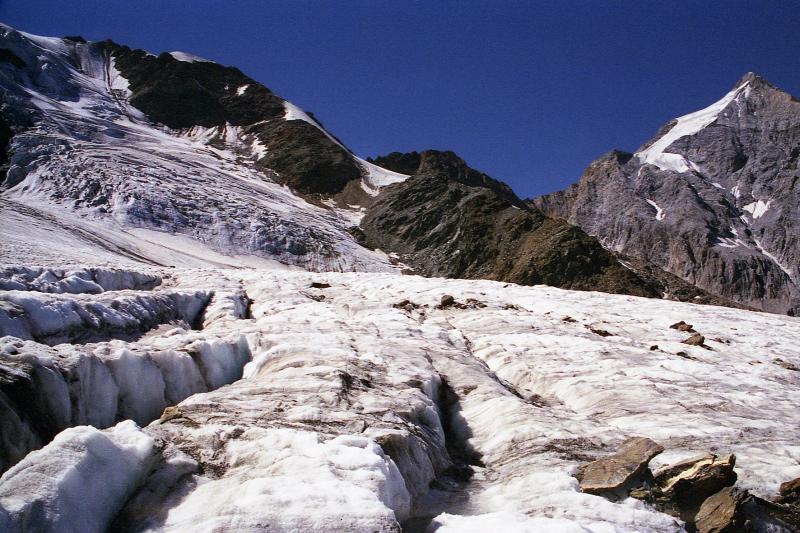 Gletscher mit Spalten und schneebedeckten Berggipfeln unter klarem Himmel.
Photo: VinschgerEngl
Gletscher mit Spalten und schneebedeckten Berggipfeln unter klarem Himmel.
Photo: VinschgerEngl
How snow conditions are changing
As temperatures rise, precipitation may fall as rain more often, or the snow cover may melt faster. Cold and mild spells can alternate, especially at lower elevations and at the beginning or end of the season. Individual snowfalls therefore say little about the season as a whole.
The IPCC report on climate impacts and adaptation provides the scientific context. It does not say whether a particular area will be open on a particular day. For that, the relevant information comes from the operator, weather service and piste status.
Understanding elevation and terrain
At certain times, higher areas may stay cold for longer, but elevation alone does not guarantee a good day of skiing. Aspect, wind, ground conditions and connecting runs all affect usability. An area may have good conditions at the top but restrictions in the valley. The guidance on snow reliability can help you frame specific questions for the operator.
Operations and adaptation
Depending on their location, ski areas may respond with piste grooming, snowmaking, changes to season dates or additional summer activities. These measures depend on technical, financial and local conditions. They can help with planning, but they cannot eliminate all dependence on the weather.
For visitors, what matters is which areas are actually open and what conditions apply there. General statements about an entire area are not a day-by-day guarantee. Follow closures and notices on site.
Choose your travel dates flexibly
Early- and late-season dates are often harder to plan for, but even the middle of winter is no guarantee. If you can book flexibly, compare current snow reports, the weather forecast and cancellation terms. Accommodation with winter hiking trails, tobogganing or indoor activities makes your holiday less dependent on any one ski run. More information about travel dates and the season can help you prepare.
What visitors should check
Before setting off, check snow quality, open pistes and lifts, the valley run, weather, travel arrangements and alternatives. If conditions are unclear, contact the operator directly. On the slopes, adjust your decisions to the conditions you actually encounter.
Climate change does not call for a blanket rejection of ski holidays, but for realistic expectations. By allowing for flexibility when planning dates, area, accommodation and activities, you can respond to changing conditions.
Frequently asked questions
Does elevation guarantee reliable snow? No. Aspect, temperature, wind, ground conditions, piste maintenance and current weather conditions all play a role.
What should I check shortly before my trip? Snow and weather conditions, open pistes and lifts, the valley run, travel arrangements, alternatives and cancellation terms.
What alternatives are worth considering? Winter hiking, tobogganing, ice skating or indoor activities can complement your holiday if ski operations are limited.
