
Sauerland Winter Sports Region
Find accommodation
Key facts about the topic
This region is included in the Skiing in Germany overview. Other countries are listed under Ski regions; for the full planning process, see Plan your ski holiday.
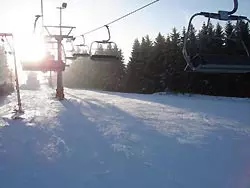 Skifahren im Sauerland: Die Skipisten des Sauerland zwischen Winterberg und Willingen werden jedes Jahr mit dem ersten Neuschnee eröffnet.
Photo: common Licence / Wikipedia
- For the Sauerland winter sports region, the specific area matters more than a blanket assessment of the country or region as a whole.
- Current snow, lift and cross-country trail information should be checked directly with local operators before travelling.
- Altitude, travel arrangements, difficulty levels and the distance from your accommodation to the access points you want to use should all be compared.
- Families, beginners, cross-country skiers and experienced, athletic skiers need different facilities.
- Prices, services, availability and cancellation terms should be checked with the relevant booking or service provider.
- Go back to the country comparison via Ski regions; Plan your ski holiday covers the whole trip-planning process.
Assessing the Sauerland winter sports region for a ski holiday
If you are planning a trip to the Sauerland winter sports region, first decide what kind of winter holiday you want. For athletic skiers, the variety of pistes, altitude, snow reliability and lift network are important. Families tend to prioritise short distances, manageable slopes, ski schools and accommodation with good connections. If you are only travelling for a few days, you will benefit from an area that is easy to reach without long transfers and offers alternatives when the weather is changeable.
The location of your accommodation is also important. Staying right by the piste saves time in the morning, but is often more expensive and less flexible. Towns in the valley often offer more choice of restaurants, shops and excursions, but require good bus or road connections to the ski area. In smaller regions, it is worth checking where your ski pass is valid, which neighbouring areas are available and whether it is realistic to move between several piste areas.
Planning, season and travel
The best time to travel to the Sauerland winter sports region depends largely on altitude and weather patterns. The season often starts earlier and lasts longer into spring at higher-altitude ski areas, while lower areas benefit especially from fresh natural snow. Book early for family holidays and public holidays, as accommodation near the pistes and larger holiday apartments can fill up quickly. Outside peak weeks, prices are often more reasonable and the pistes less crowded.
When travelling, consider winter tyres, rules on snow chains, parking and the final stretch to your holiday destination. Train travellers should check that the station, ski bus and accommodation work well together. For a relaxing stay, it is also worth checking for rental shops, ski schools, childcare, cross-country trails, tobogganing and weather-independent activities before booking.
Who is the region suitable for?
The Sauerland winter sports region is particularly appealing if it suits your ability and preferred pace of travel. Beginners need wide practice slopes and clear directions. More advanced skiers look for varied runs, reliable lifts and enough options for several days of skiing. If you are travelling with non-skiers, plan for walking trails, spas, attractions or towns that are easy to reach. That way, your winter holiday does not depend solely on the pistes.
Practical questions before booking
Before deciding on the Sauerland winter sports region, it is worth comparing a few key points: How far away is the nearest lift? What is the altitude of the pistes? How well are ski buses and car parks organised? What is available for beginners? If you are travelling with children, give particular weight to ski schools, practice slopes, tobogganing and short distances. For experienced skiers, the number of piste kilometres alone is not decisive; varied runs, modern lifts and the option to find suitable alternatives in poor visibility matter more.
Additional costs should also be included in your plans. Ski passes, equipment, lessons, parking, food at mountain huts and tourist tax can significantly affect the total cost of your trip. Accommodation a little farther away may be cheaper if transfers to the ski area are reliable. For spontaneous trips, webcams, snow reports and current lift information can help you assess conditions realistically.
Make the most of your stay
A good ski holiday is about more than getting in as many runs as possible. Especially in areas with changeable weather, winter walking trails, spas, visits to towns, cross-country trails, toboggan runs and viewpoints are valuable additions. If you are staying for several days, you can alternate strenuous days on the slopes with more relaxed activities. This keeps the Sauerland winter sports region appealing even when individual pistes are closed or some members of your group want a day off the slopes.
Finding your way around locally
In the Sauerland winter sports region, it helps to have a daily plan that is not too tightly packed. On the first day, get to know the pistes, lift times and routes to your accommodation before planning longer circuits. If you want to compare several areas, check the maps, signage, return options and last lift times. Fresh snow, strong winds or thawing conditions can lead to individual connections being closed, so it is sensible to have a plan for shorter alternatives.
It is also useful to check what services are available in town: rental shops, ski servicing, shops, a pharmacy, a doctor, an ATM and bus connections can save time if you need anything. This makes it easier to assess your stay and helps keep your ski holiday relaxed, even if small changes are needed.
For information on combining winter sports, accommodation and other excursions, the Sauerland travel information offers additional tips on towns and regional destinations.
Winterberg, Willingen and the Rothaar Mountains
Winterberg, Willingen, Neuastenberg, Altastenberg and Bödefeld are major winter sports resorts in the Sauerland and Rothaar Mountains. Alongside downhill skiing and snowboarding, cross-country skiing, tobogganing, bobsleigh and skeleton sports, and winter walking all play a part. Winterberg, home to a bike park and World Cup events, is also known for its bobsleigh track; the official Wintersport-Arena Sauerland website provides current regional information.
Practical guide to choosing a Sauerland winter sports region
Choose a Sauerland winter sports region based on your ability, travel dates and preferred type of holiday. Beginners should look for practice slopes, lessons and short distances. More advanced skiers can compare varied runs and lift connections. Families should also check children’s activities, rental options, places to take breaks and the location of their accommodation.
Altitude, temperature, precipitation, wind and piste preparation all affect operations. Shortly before setting off, check the snow report, webcam, lift updates, road conditions and information from the specific operator. In changeable weather, winter walking, tobogganing, cross-country skiing, visits to local towns or an indoor programme are useful alternatives.
When travelling, include winter tyres, possible snow-chain requirements and the final stretch to your accommodation in your plans. Staying by the piste saves time, but may cost more. A place to stay in the valley often offers more restaurants and shops, but requires reliable transport. Your budget should include ski passes, equipment, lessons, parking, accommodation and food.
For more guidance, see the overview of ski regions, the ski holiday planning tips and the comparison with skiing in Austria.
Frequently asked questions
What is important for beginners?
Practice slopes, lessons, equipment rental and short distances matter more than having as many kilometres of pistes as possible.
What can I do in bad weather?
Winter walking, tobogganing, cross-country skiing, visits to local towns and weather-independent activities can add variety to the day.
How can I check snow conditions?
Current information from operators, webcams and weather data for the specific area are key.
What information should you check immediately before travelling?
On the day of travel, check current opening hours, snow and weather conditions, access roads, parking options and ticket terms. This information can change at short notice.
What should families bear in mind when planning?
Look for short distances, suitable practice areas, childcare or lesson options, places to take breaks and a reliable meeting point.
