
Šentrupert between Gothic architecture, trails and rural heritage
Accommodation in Šentrupert
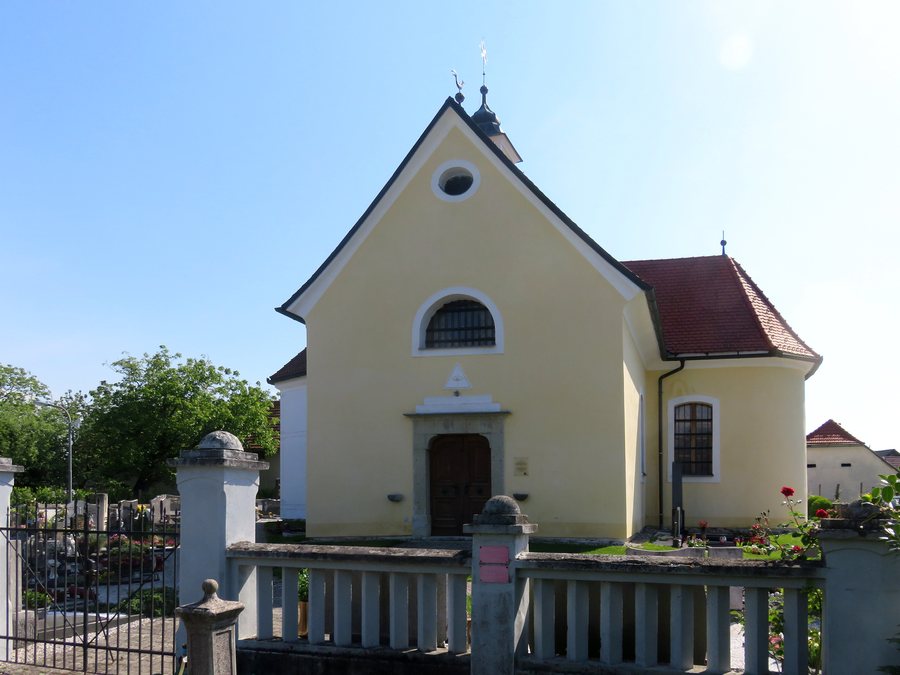
Šentrupert reveals itself through impressive churches, historic sites, accessible trails and evidence of rural life. Between Gothic ecclesiastical architecture, Baroque forms and the Dežela kozolcev open-air museum, a diverse picture of the area emerges, conveyed through specific places and well-preserved details.
Culture and history
The Church of St Rupert is one of the outstanding examples of Gothic architectural history from the second half of the 15th century. Inside, it preserves remnants of medieval frescoes as well as Gothic-Secessionist ornamentation by Koželj dating from 1897. Another historic site is the Church of St Francis Xavier on Vesela Gora. It was consecrated in 1735 and has an octagonal central structure and diagonally positioned bell towers. In 1760, it was decorated with frescoes by Anton Tušek from Škofja Loka.
The religiously shaped cultural heritage also includes the Way of the Cross in Šentrupert, built in 1730. Part of the complex is a Chapel of the Holy Sepulchre, built in 1749 on the model of the Holy Sepulchre in Palestine. The Church of the Holy Spirit in Viher has been documented since 1275; it preserves a semicircular Romanesque portal. The sanctuary and triumphal arch of this church are decorated with frescoes from the period between 1500 and 1510.
Grad Škrljevo also reaches far back into history and was first mentioned in 1043. The complex has a Romanesque core that was later partly rebuilt in the Gothic period and expanded in the Baroque period. Thus, different building phases stand side by side at several sites without their respective features merging into one another.
Trails and open-air museum
Dežela kozolcev is an open-air museum with 19 different hayracks. These come from the Mirna Valley, with the exception of one hayrack from the area around Ivančna Gorica. The Dežela kozolcev museum covers 2.5 hectares of landscaped grounds and has a 1 km network of walking paths. Expert-guided tours and presentations focus on the historical development and construction of hayracks.
The Steklasova hiking trail offers a different relationship between distance and landscape. It is 20 km long and can be walked in both directions in two sections. The trail leads from the square in front of the Church of St Rupert to Vesela Gora at an altitude of 324 m. The Baroque Church of St Francis Xavier and Barbova graščina are located there. The church and trail stations connect the aforementioned buildings along a clearly traceable route.
Rural heritage
In the surroundings of Šentrupert, the Kurent family collection at the Janezkova farm displays agricultural tools that illustrate fieldwork at the beginning of the 20th century. Visitors can view, study and also try out the tools exhibited by the Kurent family collection. In the Kurent family wine cellar, a black kitchen also preserves another element of historic farm culture.
Night hike and wine
Above the village of Šentrupert, a full-moon night hike leads to Nebesa. Local food and drinks are served above Šentrupert during this Nebesa hike. The traditional Cviček Šentrupert event, announced for 5 June 2026, has its own date. Wines from local vintners are tasted there.
For the overarching travel overview: Trebnje.

