
Piatra Neamţ: City History and Mountain Landscape
Accommodation in Piatra Neamţ
The Piatra-Neamț Telegondola opened in February 2008 and has so far carried more than 1 million tourists to the summit of Muntele Cozla. From the Piatra-Neamț Telegondola, visitors can enjoy views of the Bâtca Doamnei Reservoir, Muntele Pietricia and the Ceahlău Massif. For personal planning, these mountain views and the city's historic sites can be considered as separate points of interest.
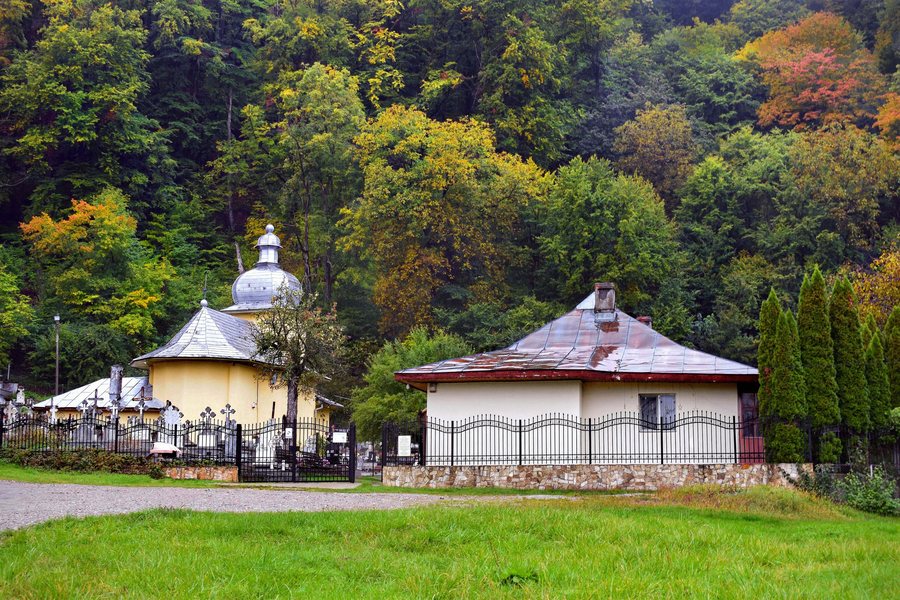 File:Municipiul Piatra-Neamţ, Neamţ, Romania (54978674772).jpg
Photo: Jocelyn Erskine-Kellie from London, UK via Source, CC BY-SA 4.0
File:Municipiul Piatra-Neamţ, Neamţ, Romania (54978674772).jpg
Photo: Jocelyn Erskine-Kellie from London, UK via Source, CC BY-SA 4.0
For Piatra Neamţ, you can sort hotel offers by travel dates, room category and cancellation policy.
Further destinations: Dumbrava Roșie.
Culture
Curtea Domnească is considered the historic centre and heart of the city of Piatra-Neamț. The historic complex consists of the Biserica „Sf. Ioan Domnesc“, the Turnul-clopotniță and the Muzeul Curții Domnești.
The wooden Baal Shem Tov Synagogue bears witness to the large Jewish community that had already existed in Piatra-Neamț since the Middle Ages. Its eastern wall contains a wooden-carved „Urna Sfântă“, created in 1835 by Şaraga Iţchok ben Moische.
The Calistrat Hogaş Memorial Museum is the only memorial museum in Piatra-Neamț dedicated to the writer. The home of the writer Calistrat Hogaş was opened to visitors in 1939 and is classified as a historic monument.
The permanent exhibition of the Muzeul de Științe Naturale Piatra-Neamț is divided into sections covering the development of the Earth's crust, the development of life throughout the geological ages and the flora and fauna of Neamț County. The collections of the Muzeul de Istorie și Arheologie Piatra-Neamț comprise more than 70,000 historical and archaeological objects.
The cultural sites differ in scale and design: The historic complex is followed by a single religious memorial site, a literary memorial and two museums devoted respectively to natural history and historical archaeology. This makes it possible to organise visits by architectural history, religious heritage, literature, natural history or archaeology without mixing the subjects. The natural history exhibition combines the history of the Earth, the development of life and regional nature, while the archaeological collections offer a different perspective through their large number of objects. In this way, the different cultural focuses remain clearly distinct from one another.
Nature
On Muntele Cozla, an easy, officially approved hiking trail marked with a blue stripe leads to the „Trei Căldări“ geological reserve; it can be hiked at any time of year. Piatra-Neamț also has a downhill cycling trail connected to one of Romania's oldest downhill courses, where a national MTB downhill competition has been held for 18 years.
The hiking trail and downhill course represent different types of activity. The information about the trail's character, markings, seasonality and competition history provides various points of reference for planning your day.
History
Today's Piatra-Neamț railway station was inaugurated on 2 October 1913 and is a historic monument.
To the main travel overview: Neamt.

.jpg)