
Nagymaros: Beach, History and Local Culture
Accommodation in Nagymaros
Nagymaros brings together a beach, local history and local culture. The free beach, historic buildings and walking paths offer different ways to shape your stay. Particularly specific details include the beach’s shoreline, the church’s construction phases and the steps on Kálvária Hill. You can plan your stay around time by the river, history, hiking or a visit to the market.
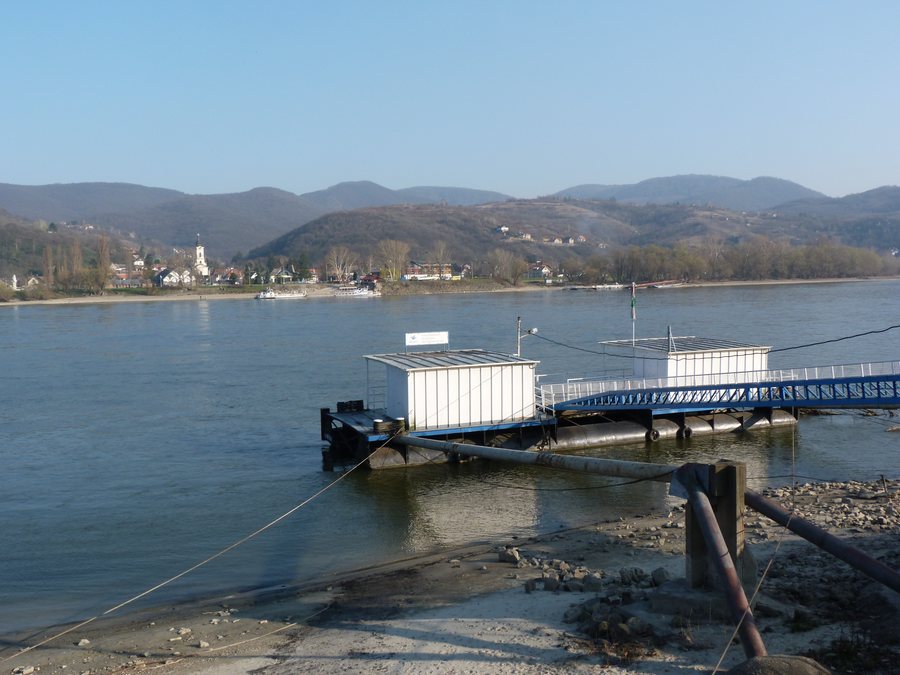 File:Kikötő, Nagymaros - 2014.03.14 (2).JPG
Photo: Derzsi Elekes Andor via Wikimedia Commons, CC BY-SA 3.0
Beach and Water Activities
The free beach stretches along a 200-metre section. Its shore is pebbly and sandy, and muddy in places, so the ground is not uniform throughout. The beach has several food and drink options, an ice cream parlour, a playground, toilets and showers. There is also a self-service bicycle repair station. This means the site offers both places to take a break and practical facilities.
Those interested in water activities will find a BTZ rental service in Nagymaros for kayaks, canoes and boats. Since availability may change, it is advisable to check before making plans. This lets you consider a beach visit and a possible boat rental as separate options without assuming that anything is currently available.
Church History and Buildings
Construction of the Roman Catholic church began at some point in the first half of the 14th century. Its tower is the only surviving medieval ecclesiastical monument in the Danube Bend today. A relief depicting a bunch of grapes is set into the church’s northeastern plinth and is said to date from Roman times. The dating of the relief is therefore an attribution; the relief itself is a feature of the building.
The Calvary Chapel and the stations in Nagymaros are also specifically dated: they were built in 1773. The Calvary steps were created in the 1920s with donations from local families. Together with the church’s construction date, these dates provide an overview of several distinct periods in the town’s history.
Walks and Historic Landscape
The path up Kálvária Hill has 167 steps, followed by a pleasant walk through a cool forest. The number of steps gives you a clear sense of the first section, while the rest of the route is described as a walk through the woods. Another hiking route starts at Nagymaros railway station and follows the yellow trail markers, Panoráma út and Kittenberger út to Remete Cave in the surrounding area. The route is designated as safe and marked; the cave is in the vicinity of the destination.
The historic landscape also includes a sweet chestnut forest planted in the 14th century, which was once an attraction in Nagymaros. The description refers to its former significance and does not state that a forest still exists today.
Market, Tájház and Events
At Nagymarosi Termelői Piac, producers offer meat, vegetables, mushrooms and homemade dairy products, among other things. There are also fruit juices and syrups, pastries, freshly baked bread and sweet yeast cakes. The Tájház presents the lives of the Swabians who came to Nagymaros through everyday objects and a furnished home with old furniture and equipment. The market and the Tájház thus show two different sides of local culture: produce from local vendors and insights into a historical way of life.
The Nagymaros Catholic Youth Meeting has been held every May and October in the parish garden for around half a century. The Misztrál Festival is also held annually. In good weather, the Misztrál Ensemble performs outdoors on the György Szabados stage in the church garden. The distinction matters when planning: May and October are specified for the youth meeting, while the ensemble’s outdoor performance is weather-dependent.
Discover more destinations: Verőce, Kismaros, Szokolya.
Return to the main travel overview: Váci.

