
Nagybörzsöny: Accommodation and Culture
Accommodation in Nagybörzsöny
Nagybörzsöny in Hungary is best represented in the verified local information by its mining and craft history. The village museum (Tájház), a historic watermill and two churches offer insights into different chapters of the village’s past. It therefore deserves to be considered as a place to stay based on this cultural interest. These details do not establish that there is a ski resort or ski operation in the village, or that it is particularly suitable for winter visits; anyone wishing to ski should plan a specific ski destination separately.
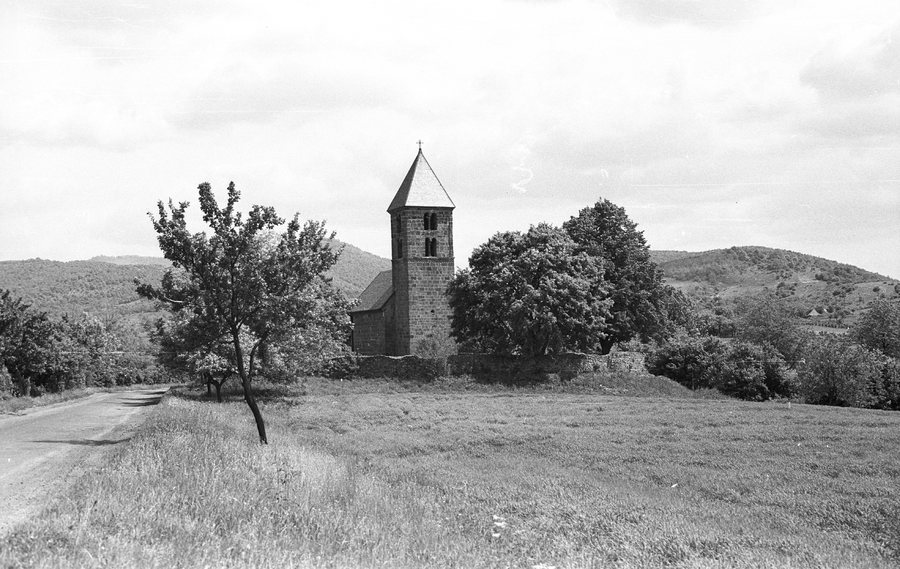 File:Nagybörzsöny, Szent István király templom. Fortepan 59784.jpg
Photo: FOTO:Fortepan — ID 59784 : Adományozó/Donor: Tóth Lajos. via Source, CC BY-SA 3.0
Key facts
- The village museum is housed in a 17th-century building.
- It presents mining history, ores and minerals from the surrounding area.
- A preserved kitchen offers a glimpse of domestic life in the early 20th century.
- The Antal Watermill, a listed monument, was completed in 1851.
- The Bányásztemplom has a Gothic sacrament house.
- The Szent Miklós Church dates from the late 18th century.
At the village museum: mining and everyday life
The village museum uses a 17th-century building to house several small exhibitions about the village’s more recent history. They explore the local mining industry, as well as ores and minerals from the mountains. The preserved kitchen, with its open smoke hood, offers a different perspective: it shows the furnishings and cooking methods of German housewives in Nagybörzsöny in the early 20th century. Household items and the tools and processes of various crafts complement this picture. The collections make clear that the village’s history is about more than just churches and mining. However, the descriptions do not establish current opening hours or that demonstrations of historical techniques are available at all times.
Watermill rebuilt after the 1847 fire
The listed “Antal-féle vízimalom” was built along with its millraces after the great fire of 1847 and completed in 1851. The sequence of fire, reconstruction and completion places the building in a specific historical context. It does not indicate whether the mill still operates today or whether its interior is open to visitors. On a walk around the village, the building can be appreciated as evidence of past use; a working demonstration should not be assumed. Visitors particularly interested in crafts can regard the mill and village museum as complementary, but separate, destinations.
Two churches from different periods
The Bányásztemplom, or Miners’ Church, takes its current name from the miners’ emblem—a crossed wedge and hammer—above the Gothic west portal. A Gothic sacrament house is located on the north side of the choir. The Szent Miklós-templom, by contrast, was built in the late 18th century; devotion to Saint Nicholas had been rooted in the village for longer. These features help distinguish the two buildings. Service times, access to the interiors and rules governing religious use are not fixed features of a tourist walk and should be respectfully checked before a visit.
Accommodation and the pace of your visit
The confirmed attractions point to a stay for visitors interested in architecture, mining history and everyday culture. Compare accommodation options based on which of these places you actually want to visit and how you plan to get around locally. The page on the Szobi region provides broader geographical context; it is not evidence of a ski resort in Nagybörzsöny. For an actual ski trip, independently check the location, winter operations and travel arrangements for a specific resort.

