
Szuha: Nature, Ecotourism and Architectural History
Accommodation in Szuha
Three distinct themes are central to exploring Szuha: an established ecotourism centre, a protected spring and woodland area, and historic buildings. They present the town through visitor facilities, natural features and architectural history—three concrete perspectives that offer different ways to understand Szuha.
Ecotourism and visitor facilities
A North Mátra Ecotourism Centre has been established in Szuha. The building was converted into an ecotourism reception building and visitor centre, with interactive features and games for day-trippers and groups; active play and recreation facilities were also added. A hiking station and an events area were also set up in the Szuha–Mátraalmás area. The two facilities have different focuses: the hiking station caters to hikers, while the events area adds a venue for events.
Spring, woodland and architectural history
One protected natural feature is Bükkfa Spring, outside the built-up area of Szuha, on the road towards Parádsasvár. It emerges between the roots of an old beech tree. The surrounding woodland is also protected and covers 14 hectares. The spring and woodland present two scales of the same natural theme: a single spring and a larger protected landscape. Together, they give the local natural environment a clear spatial structure.
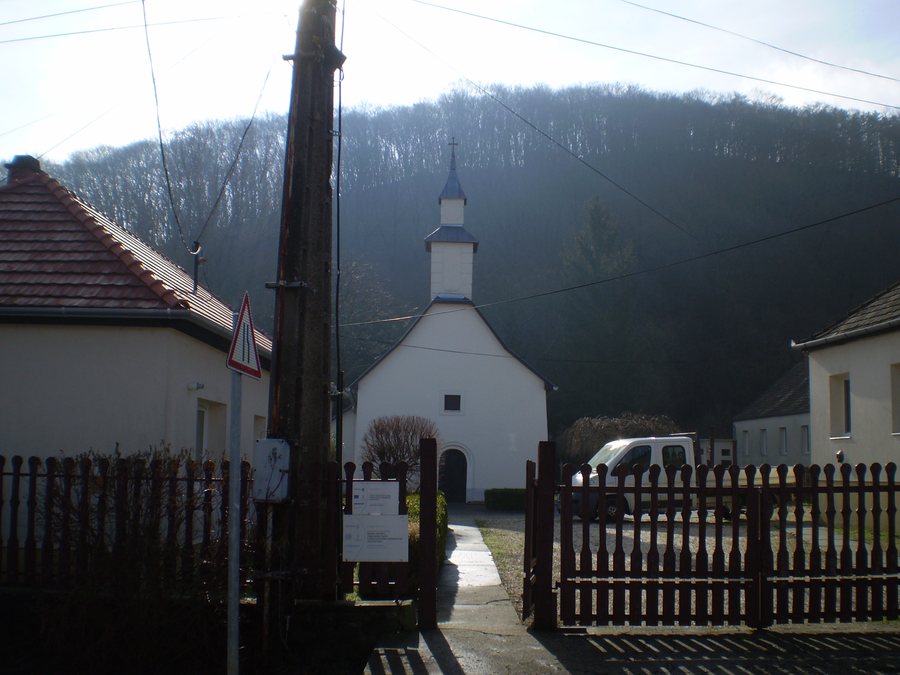
The Kisboldogasszony Church in Szuha dates back to a 15th-century Gothic church and was remodelled in the Baroque style in 1768. Its architectural history can therefore be understood as a progression from Gothic origins to a later Baroque redesign. The bell tower is a squat, square, single-storey structure built in the Baroque style in the 18th century. At the church, the focus is on the sequence of architectural styles; at the tower, on its shape, number of storeys and style.
More places to explore in the wider destination of Neuburg
The wider destination of Neuburg offers further distinct cultural and natural themes. Hollókő is an old village and Palóc settlement in Nógrád County, northern Hungary. It is a consciously preserved, living example of rural life before the 20th-century agricultural revolution. The focus there is on a historic settlement form that has endured.
The Pásztó Museum offers a different perspective on history. Its permanent and temporary exhibitions are housed in a Baroque Cistercian monastery building rebuilt in 1717–1718. The museum also presents a medieval glassworks and blacksmith’s workshop as an open-air exhibition and as a unique industrial heritage monument in Hungary.
The Boszorkány-kő geological trail is located in the Karancs-Medves Landscape Protection Area, established in 1989 and covering 6,928.6 hectares. It illustrates basalt volcanism from 2.4 to 5.2 million years ago. The rock formations on display include sediment inclusions torn from the depths, curved lava slabs and basalt columns formed by weathering. Thus, alongside historic settlements and museums, the wider destination of Neuburg also offers specific geological attractions.
For the wider travel overview: Bátonyterenyei.

