
Bélapátfalva: Abbey, Hiking Trails and Culture
Accommodation in Bélapátfalva
Bélapátfalva can be explored through two special highlights: the Cistercian Abbey at the foot of Bélkő and the Bél-kő nature trail, which starts at the abbey. The area also offers local craft history, memorial sites and nearby excursion destinations. This makes it possible to combine architectural history, landscapes and local themes during your stay.
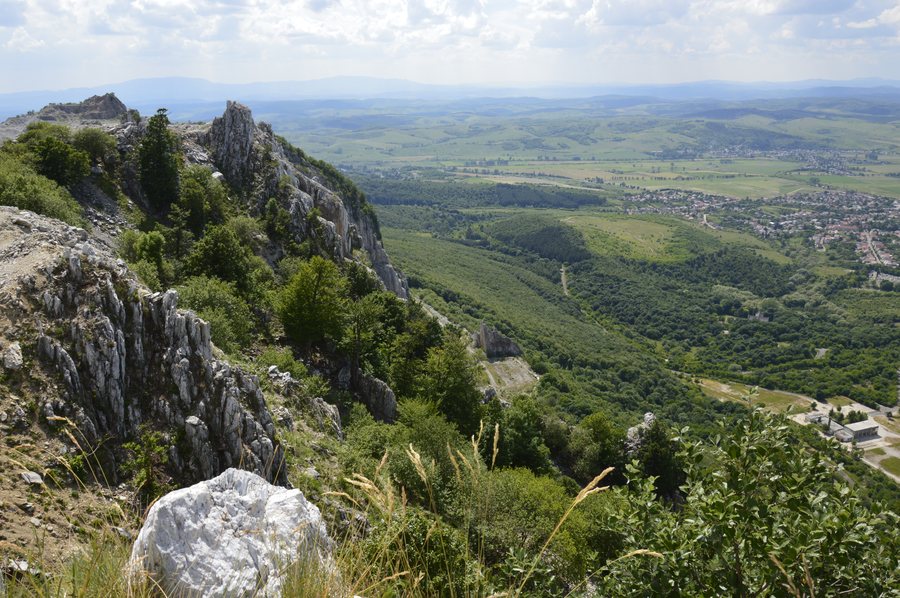 File:Rocks, Bélapátfalva, Hungary - panoramio.jpg
Photo: Mrcsifkin via Wikimedia Commons, CC BY-SA 3.0
Cistercian Abbey: History and Architecture
The Bélapátfalvai Ciszterci Apátság was founded in 1232 by Kilit II, Bishop of Eger, at the foot of Bélkő. Its late Romanesque features include sturdy masonry, a basilica-style layout and a stepped portal. Gothic rose windows and a Baroque organ gallery complete the architectural picture.
The interior is also worth a closer look: the south aisle contains the Altar of Saint Emeric, a work created in 1748 by József Hartmann, a sculptor from Košice, and an outstanding example of Hungarian Rococo art. The church organ was built in 1775 by Ferenc Szabó, an organ builder from Eger; it is in working order. The abbey’s founding, architectural features and interior provide several distinct historical layers, rather than reducing it to a single architectural period.
The Bél-kő Nature Trail: Route and Themes
The Bél-kő nature trail starts at the Cistercian Abbey and leads to a lookout point at an altitude of 816 metres. The five-kilometre route has seven stations; the hike is estimated to take around two to three hours. These details provide a concrete basis for planning your time, without reducing the route to a simple viewpoint hike.
The stations cover the area’s cultural history, the geological structure of Bélkő, plant communities, and the protected flora and fauna of the rocky grasslands. The trail thus leads from a historic site to themes related to the landscape and its natural environment. Those interested in the mountain’s history will find geological and ecological content here alongside cultural history. The long-distance Országos Kéktúra trail also passes through Bélapátfalva.
Chapels, Memorial Sites and Crafts
Nearby is the listed Roman Catholic Gilitka Chapel, also known as Saint Anne’s Chapel. It is located in the valley of the Gilitka stream, on a section of the Országos Kéktúra between Bélapátfalva and Szarvaskő. It was built in 1750 by Miklós Androvics, rector of the Eger seminary.
An association organizes an annual hike to the Bábafa in spring during Születés Hete and again in autumn. Check the dates for the current year before travelling. A small memorial site in the form of a shelter was established in 2010 at the edge of the clearing next to the Bábafa. Its wall bears information panels with a commemorative message. In Bélapátfalva, the Hősök könyve also commemorates local soldiers who fell in the First and Second World Wars.
Local crafts also tell the story of the town. The distinctive folk painting style of Bélapátfalva’s Hartsteingut developed from 1866 under the direction of Sándor Dubravszky and his family. During this period, underglaze painting replaced overglaze painting. The former factory closed in 1927; the development of the painting style and the change in technique mark different periods in this local craft tradition.
Lake and Recreation
Gyári-tó and its surroundings are a popular destination for excursions and recreation among locals and visitors. The lake adds a landscape dimension of its own to the abbey, hiking trails and historical themes. Together, these places offer different ways to shape your stay: architecture and crafts sit alongside hiking, nature themes and lakeside recreation.
Additional Themes in the Wider Destination of Heves
The Hevesi Füves Puszták Protected Landscape Area lies in the southern part of Heves County, within the wider destination of Heves. It covers 16,114 hectares, was designated in 1993 and reached its current extent following expansions in 2005 and 2008.
Other nature and winter activities are also part of the wider destination of Heves. The 6.5-kilometre Ilona-völgyi nature trail along the Ilona stream passes geological features of the Eastern Mátra Mountains and traces of former ore mining. At Kékestető, fans of active tourism can enjoy winter sports in winter. These regional details provide orientation beyond Bélapátfalva and relate to Heves.
Discover more destinations: Szilvásvárad, Nagyvisnyó, Mikófalva, Bükkszentmárton, Balaton.
Go to the overview of the wider destination: Bélapátfalvai.

