
Glasgow: Museums, Markets and History
Accommodation in Glasgow Region
Kelvingrove opened in Glasgow in 1901 as part of the International Exhibition and became the city's art gallery and museum in 1902. Its collections include fine art and design, natural history, arms and armour, human history and ancient Egypt. The museum hosts temporary exhibitions, educational programmes and events throughout the year.
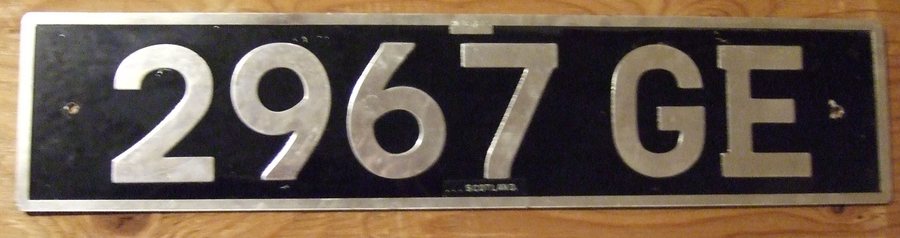 File:United Kingdom license plate 2967 GE Glasgow SCOTLAND 1928-1930 Flickr - woody1778a.jpg
Photo: Jerry "Woody" from Edmonton, Canada via Source, CC BY-SA 2.0
File:United Kingdom license plate 2967 GE Glasgow SCOTLAND 1928-1930 Flickr - woody1778a.jpg
Photo: Jerry "Woody" from Edmonton, Canada via Source, CC BY-SA 2.0
Culture and History
The Burrell Collection complements this range of museums with more than 90 digital representations, as well as interactive and immersive experiences. The interactive displays feature Chinese ceramics from various dynasties, medieval stained glass and Impressionist paintings. By car, the Burrell Collection can be reached via 2060 Pollokshaws Road and Junction 2 of the M77.
The Riverside Museum is located at the confluence of the Rivers Kelvin and Clyde. Its transport and technology collections reflect Glasgow's contributions to shipbuilding, train manufacturing and engineering. Glasgow Cathedral remains an active parish church of the Church of Scotland; worship has been held there continuously for fourteen centuries. The present cathedral was built in the 12th and 13th centuries and is the only cathedral on mainland Scotland to have survived the Reformation with its fabric fully intact. The tomb of St Mungo is located in its crypt.
The Mackintosh Tearooms are located in elaborately restored tearooms dating from 1903 and now serve as a visitor centre, exhibition space and gift shop. Glasgow Necropolis is a historically significant Victorian cemetery covering approximately 37 acres, or 15 hectares. Guided tours tell the stories of some of the approximately 50,000 people buried there.
Nature and Trails
Glasgow Botanic Gardens are free and open to the public. They were founded in 1817 and opened at their present location in 1842. Kibble Palace is home to the National Collection of tree ferns, carnivorous plants, sculptures and a koi pond.
Glasgow is easy to explore by bicycle. The city can also be discovered on foot, by bicycle or by public transport using routes, trails and themed itineraries. Each mode of transport and themed itinerary focuses on different aspects of planning a day.
Markets and Local Produce
Merchant Square Market features arts and design stalls selling jewellery, candles, cards, artworks and photographs handmade in Glasgow. The Rail Yard holds a weekly farmers' market every Saturday, offering produce, baked goods, gifts and crafts from local producers.
Park Lane Market in Glasgow's Southside brings together local traders, food and live music. It takes place on the first, second and last Sunday of each month. The markets in Partick in the West End and Shawlands in Glasgow's Southside offer Scottish produce such as seasonal fruit and vegetables, meat and local cheeses, as well as a variety of street-food options; they take place on alternating Saturdays. The different weekly and monthly schedules can be compared according to the day of your trip.
The planetarium at Glasgow Science Centre uses a digital fulldome projection system and offers live shows hosted by astronomers. Fulldome films are shown on a 15-metre hemispherical dome.
Other destinations: Glasgow, Carmunnock, Highland, Renfrewshire, West Dunbartonshire
For the higher-level travel overview: Scotland.

