
Lichtenhain between Waterfall, Hiking Trails and the Kirnitzschtalbahn
Accommodation in Lichtenhain
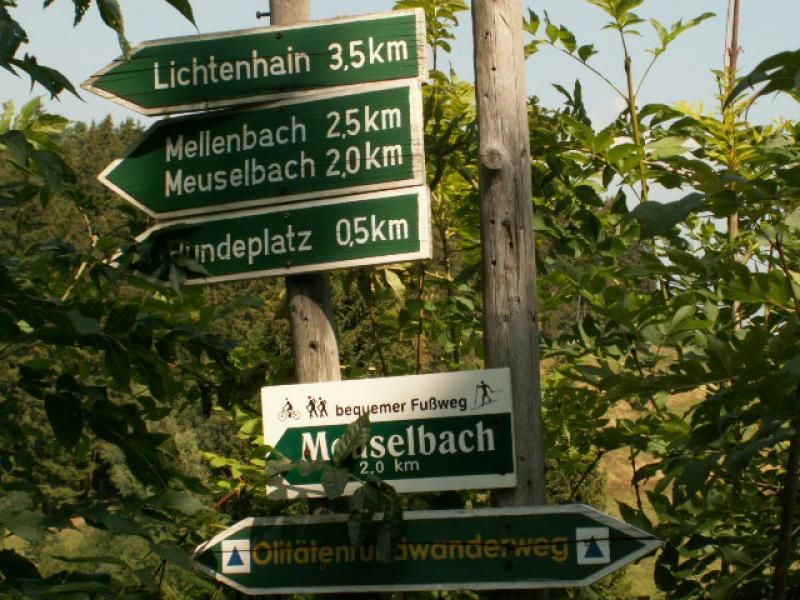
If you want to assess Lichtenhain as a travel destination, two areas of experience take center stage: the Lichtenhain Waterfall combines hiking trails with rail and bus access, while the church and Flower Festival shape the cultural side of the village. This gives you clear starting points for planning hikes, nature observation and historical impressions.
Church history: The oldest reliable record that Lichtenhain had a church dates from around 1346.
Present appearance: Lichtenhain Church acquired its present appearance during renovations in 1696 and 1697.
Altarpiece: An altarpiece depicts the scene in which Abraham is supposed to sacrifice his own son as proof of his faithfulness to God, but an angel stops him at the last moment.
Kirnitzschtalbahn: The historic Kirnitzschtalbahn has connected Bad Schandau with the Lichtenhain Waterfall since 1898. Its eight-kilometre route is single-track and ends at the waterfall.
Hiking access points: Each of the nine stops on the Kirnitzschtalbahn is a starting point for hikes into the rocky landscape of Saxon Switzerland National Park.
Getting to the waterfall: The Lichtenhain Waterfall can be reached by bus route 241 and the Kirnitzschtalbahn; from the Lichtenhainer Wasserfall stop, it is about a three-minute walk.
Circular trail: The Lichtenhain Circular Trail begins and ends at the Lichtenhain Waterfall.
Local culture: The Lichtenhain Flower Festival has existed in its present form since 1963.
From the Waterfall into the Rocky Landscape
The Lichtenhain Circular Trail offers particularly clear orientation when planning a day out because its start and finish are at the same destination. This makes it possible to view the route as a self-contained excursion that does not require a second endpoint to be organised. This structure can be helpful when a hike is to be combined with a journey to the starting point.
The Kirnitzschtalbahn also opens up several options for planning hikes. Since each of its nine stops serves as a starting point for hikes, you can connect the journey and the beginning of your tour in your planning. The railway line is therefore not merely a connection between Bad Schandau and the waterfall, but also a means of transport along various hiking access points.
Two means of transport are available for travelling to the Lichtenhain Waterfall. You can therefore weigh up whether travelling by historic railway or by bus route 241 better suits your schedule for the day. The short walk from the stop clearly separates the final part of the journey from the ride itself.
The waterfall is not aimed solely at hikers. Since the 19th century, it has also attracted nature lovers and people seeking relaxation to the valley. For visitor groups with different interests, this creates a shared destination where the experience of nature, route planning and a peaceful stay can be considered together without everyone having to choose the same activity.
Church and Local History
Lichtenhain Church takes you into a different historical period from an excursion to the waterfall. The early record of its existence and the later renovation point to a local history that can be traced over several centuries.
The altarpiece adds a distinctive thematic accent. Anyone who views a church not only in terms of its age but also through individual details of its furnishings will find a clearly identifiable point of reference here. The motif makes the interior a place where architectural history and the tradition of religious imagery come together.
The church and the waterfall represent different ways of experiencing Lichtenhain: one focuses on a long-established connection with the village and a single pictorial motif, while the other centres on nature, trails and the historic transport link. This distinction helps you structure your stay around your own interests instead of combining all the attractions into one overall impression.
Flower Festival and Early Travel History
It has existed in its present form since 1963. The festival is therefore one of the distinct points of reference through which Lichtenhain's cultural development can be viewed alongside its older architectural and landscape connections.
The Lichtenhain Waterfall also has a dimension in the history of tourism. It is regarded as one of the few curiosities from the early days of tourism in Saxon Switzerland that have survived to the present day. Its value for trip planning therefore lies not exclusively in its natural features: the site also represents the historical development of travel and excursion destinations in this landscape.
Together, the waterfall, railway, circular trail, church and Flower Festival create a differentiated picture of Lichtenhain. The waterfall represents trails and nature, the Kirnitzschtalbahn a historic connection with several hiking access points, the church a long local history, and the Flower Festival vibrant culture in its present form. This allows you to decide even before planning your day whether the focus should be on hiking, landscape, transport history or cultural impressions.
Further Places for Comparison
If you would like to compare Lichtenhain with other destinations within the same broader destination, you can also include Mittelndorf and Hinterhermsdorf in your orientation.
For the overview of the wider destination: Sebnitz.
