
Curling on a Winter Holiday
Curling combines precision, teamwork and movement on a smooth ice rink. During a ski holiday, a session is a great change of pace from skiing and may also suit companions who don’t ski. Beginners don’t need much prior experience, but should pay close attention during the introduction and follow the rules of the rink.
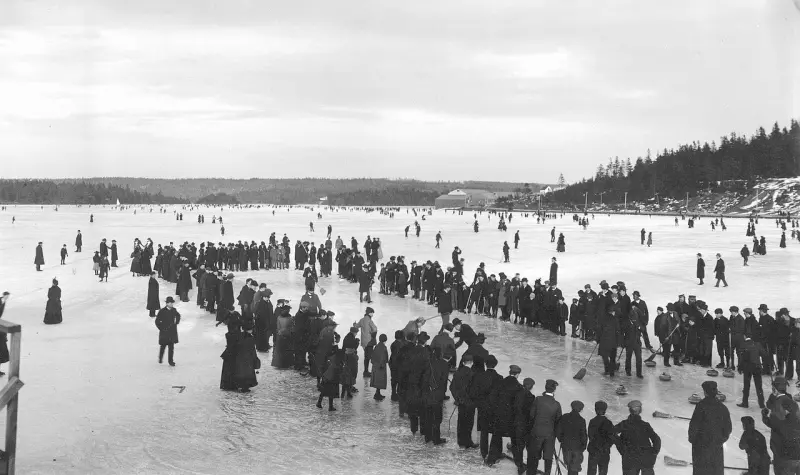 Curling auf den Dartmouth Lakes, ca. 1897. Dartmouth, Nova Scotia, Kanada
Photo: W.L. Bishop / gemeinfrei
How curling works
In curling, heavy stones are slid across an ice rink towards a marked target area. Teammates use sweeping to influence how far the stone travels and how much it deviates. So success depends not only on strength and accuracy, but also on communication and controlled pacing. The exact format may vary at recreational venues.
For visitors, the focus is usually on giving it a try. An introduction explains how to release the stone, move on the ice and keep a safe distance from other players. The official information from World Curling outlines the sport; the venue’s own rules and the organiser’s instructions also apply during your visit.
Equipment and clothing
Many rinks provide stones, brooms and curling shoes. Before booking, check what is included in the price. Warm, flexible layers are practical because the venue can be cold, even though you’ll warm up while playing. Loose scarves, jewellery and slippery soles are not suitable on the rink.
Beginners are better off starting with short, controlled movements. Children need appropriately sized equipment and clear supervision. If you’re coming as a group, let the provider know everyone’s ages and experience so they can arrange suitable groups and enough breaks.
For families and groups
Curling is suitable for families, groups of friends and mixed-ability groups, since people at different skill levels can play together. However, the cold and unfamiliar movements can be more tiring than expected. A shorter session with breaks is usually more enjoyable than a programme that runs too long.
Before your visit, check the minimum age, meeting point, changing facilities, duration and cancellation policy. If the rink is outside the ski area, include bus connections, parking and the return journey in your plans. Agreeing on a fixed meeting point helps keep the group together after the session.
Combining curling with a ski holiday
After several hours on the slopes, curling offers a change of pace and works different muscles. Non-skiers can take part too. Places with ice skating, sledding or winter hiking offer further options if the weather changes your ski day.
On your first day of holiday, leave enough time between arriving, collecting rental equipment and your session. If you plan to ski again the next day, consider the strain on your legs and make time for a warm meal and enough sleep.
Making the right choice at the venue
Not every ice rink offers taster sessions every day. Opening hours, reservations and group sizes can change, so the provider’s information is key. If you arrive late or there is heavy snowfall, it helps to have checked an alternative in advance.
A successful session doesn’t depend on athletic ability. By listening, being considerate and adjusting your pace, you can enjoy curling without prior experience. Families can choose areas that are easy to navigate, while experienced participants can discuss more challenging variations with the instructor.
Prepare well and stay flexible
Before your session, check that the activity suits your experience, fitness level and group. Include ages, meeting point, duration, required equipment, breaks and the return journey in your plans. Opening hours, prices and availability may change depending on the season, so confirm them with the provider.
The weather also affects the day. Cold, wind, visibility and wet clothing can all affect concentration and exertion. A warm layer to change into, drinks and a charged phone are simple but useful preparations. If you’re travelling with children, plan shorter sessions, easily accessible breaks and a reliable adult contact person.
Consider the activity as part of your winter holiday as a whole. The information in Planning a ski holiday can help with routes, time buffers and combining the activity with a day on the slopes. Snow conditions, school holidays and the venue’s seasonal opening dates are also important when choosing when to travel. A flexible plan is better than a packed schedule with no room for contingencies.
When choosing accommodation, short travel times, a dry place to store equipment and good connections to the town centre can make a difference. If you’re combining several sports, allow for recovery days and make sure shoes, gloves and clothing can dry overnight. This leaves room for spontaneous changes without compromising safety or comfort.
Respect for staff, other visitors and local rules is part of every winter sports activity. An introduction is not a formality: it explains movement areas, signals, equipment and the limits of the activity. Ask any questions before you start. If you feel pain, dizzy, overwhelmed or unsafe conditions arise, end the session and inform the staff responsible.
Frequently asked questions
Do I need experience?
No. For a suitable taster session, an introduction is usually enough. What matters is paying attention, wearing suitable clothing and being willing to follow the rink’s rules.
Is curling suitable for children?
That depends on the provider, the child’s height and the minimum age. Ask about children’s sizes, supervision, breaks and a safe area for beginners.
What should I check in advance?
The date and time, duration, meeting point, rental equipment, clothing, minimum age and cancellation policy. If travelling from the ski area, make sure the return journey and a weather buffer are also taken into account.
