
How alpine skiing developed
Alpine skiing developed from skiing on steeper terrain. New bindings and techniques were crucial, making controlled turns and descents easier. Competitions, and later Olympic events, turned it into an organized sport. Its development can be traced through a number of places and people, without attributing the long-standing, worldwide use of skis to a single origin.
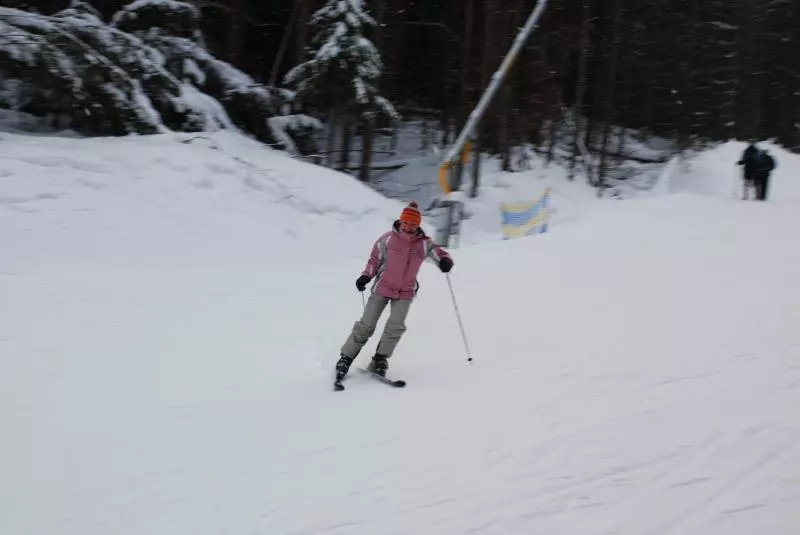 Eine Skifahrerin fährt auf einer verschneiten Piste durch einen Waldabschnitt.
Photo: Olga Buko / MaxTD Imagebank
Key facts
- In 1868, Sondre Norheim won Norway’s first national ski competition in Høydalsmo.
- Early downhill competitions were held in Mürzzuschlag in 1893.
- Between 1890 and 1896, Mathias Zdarsky developed a laterally stable binding for alpine skiing.
- In 1911, Arnold Lunn organized an early long-distance downhill race in Montana, in the Swiss canton of Valais.
- The alpine combined became an Olympic event in Garmisch-Partenkirchen in 1936.
From regional techniques to downhill skiing
Long before alpine ski racing emerged, skiing was a means of transportation in snowy regions. During the 19th century, competitions and regional techniques became more prominent. Sondre Norheim, from Morgedal in Norway, won his country’s first national ski competition in Høydalsmo in 1868. He developed his own wooden skis and a cable binding; his name is closely associated with the Telemark style. This development marks an important step toward modern skiing, but not a single beginning of skiing itself.
Bindings and techniques for steep terrain
The long skis of the 19th century, which offered little stability and control, were difficult to manage on steep Alpine descents. From 1890, Mathias Zdarsky experimented with skis from Norway and, by 1896, had developed a laterally stable steel sole binding in Lilienfeld. He shortened the skis to about two metres and taught a technique for skiing on steeper slopes. Early downhill competitions were held in Mürzzuschlag in 1893; races like these also demonstrated the importance of control and suitable equipment.
Racing and Olympic recognition
In 1911, Arnold Lunn organized a longer downhill race in Montana, in Valais; this gave rise to the Kandahar racing tradition. The first Winter Olympic Games, held in 1924, did not yet include an alpine downhill event. In 1936, the alpine combined became part of the Olympic program in Garmisch-Partenkirchen. The sport thus evolved from local skiing skills and early races into internationally regulated competitions. Today, alpine skiing comprises several disciplines, which differ, among other things, in course layout and gate spacing.
FAQ
What is the difference between alpine skiing and cross-country skiing?
Alpine skiing focuses on controlled descents on sloping terrain, while cross-country skiing takes place on trails that include flat and uphill sections. When choosing a ski resort, the availability of suitable downhill runs or cross-country trails is key.
