
Skiing in the Vaud Alps
The Vaud Alps combine established ski areas, quieter mountain villages and winter activities beyond downhill skiing. The right base depends on your group, the number of ski days and the distance you want to travel each morning. Use the regional description as a starting point, then check the exact resort, current snow, lift operation and road conditions before you set out.
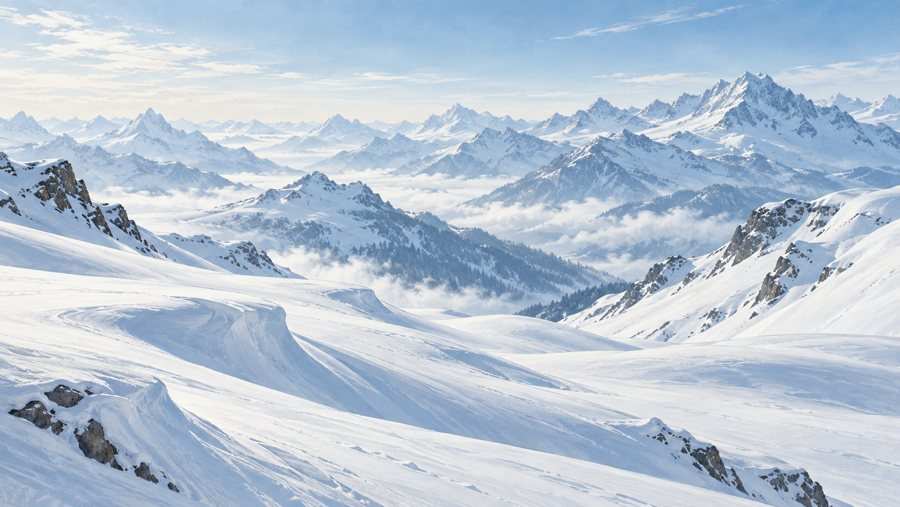 Generic AI illustration of snow-covered Alpine slopes in the Vaud Alps; not documentary and not a specific landmark.
Photo: OpenAI image generation / Max-TD (AI illustration)
Generic AI illustration of snow-covered Alpine slopes in the Vaud Alps; not documentary and not a specific landmark.
Photo: OpenAI image generation / Max-TD (AI illustration)
Which part of the Vaud Alps suits your trip?
Villars, Gryon and Les Diablerets form the best-known connected ski area in the region. The official Vaud tourism information on ski areas describes more than 132 kilometres of pistes, terrain for different abilities and links between the resorts. That makes the area worth considering for groups who want several sectors, while beginners can still choose a dedicated learning area.
Leysin and Col des Mosses offer a different setting, with options for alpine skiing, snowboarding and Nordic activities. Château-d’Oex, Rougemont and Rossinière are useful choices when cross-country skiing, ski touring, village character or a less concentrated winter programme matters more than the size of one lift network. The regional choice should therefore follow the planned activities rather than a single kilometre figure.
Compare terrain with the ability of the group
Families should look for a practice area, ski school, equipment hire, simple access from the accommodation and places for warm breaks. A compact village can be more convenient than a larger domain if children or beginners need short, predictable journeys. Ask whether lessons, rental and food are available close to the chosen access point, and check the return route for tired skiers.
Experienced skiers can compare altitude, piste variety, lift connections, wind exposure and the final route back to the village. In a mixed group, agree a meeting point and a flexible time plan before taking different lifts. Check whether the sectors are linked directly or require a local bus or car. For a wider Swiss comparison, see skiing in Switzerland, including skiing in Valais, skiing in Graubünden and skiing in the Bernese Oberland.
Plan accommodation and the journey
Choose the access point before booking a room. Compare the distance to the lift, the route to the ski school, parking or public transport, equipment storage and the availability of shops and restaurants. If the accommodation is outside the resort centre, allow time for the morning transfer and for the return after the lifts close. Winter roads, snow chains and parking rules can change the practical value of a seemingly short distance.
Rail and local bus connections can reduce driving, but the final mountain section still needs checking for the exact village and travel date. Families may prefer one base with short daily journeys; experienced groups may accept a longer transfer for access to a particular sector. Keep one low-effort day in reserve if weather or road conditions make the original plan unsuitable.
Check snow, weather and lift operation
Conditions can differ between the valley, mid-mountain and the highest slopes. Check the official information for the selected area before departure and again on the morning of skiing. Look at open lifts, piste status, snow cover, wind, visibility, webcams and the route back to the accommodation. Do not assume that a general regional description is a live snow report.
At higher elevations, wind or poor visibility can affect exposed lifts even when the valley looks clear. If the forecast is unsettled, plan a shorter route and identify a village activity or a lower alternative. A flexible programme is especially useful when the group includes children, beginners or people who are not skiing every day.
Budget, equipment and days away from the slopes
Calculate the complete cost: travel, accommodation, lift passes, lessons, rental, meals, parking and local transfers. Add a reserve for a weather day or for equipment that must be hired locally. Check whether the chosen resort offers lockers, drying space and a practical place to collect or return equipment.
Winter walks, snowshoe routes, sledging, cross-country trails, scenic rail journeys and wellness activities can make the holiday enjoyable for non-skiers. Confirm opening times and suitability before booking, because routes and facilities depend on snow, daylight and weather. For comparisons outside Switzerland, also consider skiing in France, skiing in Austria, skiing in Italy and skiing in Germany.
Questions before booking
Is the Vaud Alps a good choice for beginners?
Yes, if the selected resort has a suitable practice area, instruction, rental equipment and a manageable route from the accommodation. Check the exact village rather than relying on the regional name.
Which area is best for families?
Compare children’s areas, lesson times, warm indoor spaces, food, accommodation and the time needed to reach the first lift. Short daily journeys may matter more than the largest possible ski domain.
Can one pass cover every Vaud Alps resort?
Do not assume that all areas share one ticket or one lift network. Check the current terms for the exact resort and travel dates.
What should be checked before a ski day?
Review snow, weather, wind, visibility, open lifts, pistes, road conditions and the planned return route. Keep an alternative for a change in conditions.
Are there activities for people who do not ski?
Yes. Depending on the destination and conditions, consider winter walks, snowshoeing, Nordic skiing, sledging, scenic transport or a wellness day.
