
Skiing in Japan
Find accommodation
Japan offers a wide range of ski holidays: Hokkaido is usually reached by air, Tohoku is served by major rail and airport hubs, while some areas near Tokyo can be reached by Shinkansen for a short trip. When choosing a destination, snow is only part of the equation—the travel time and onward journey to the mountain also matter.
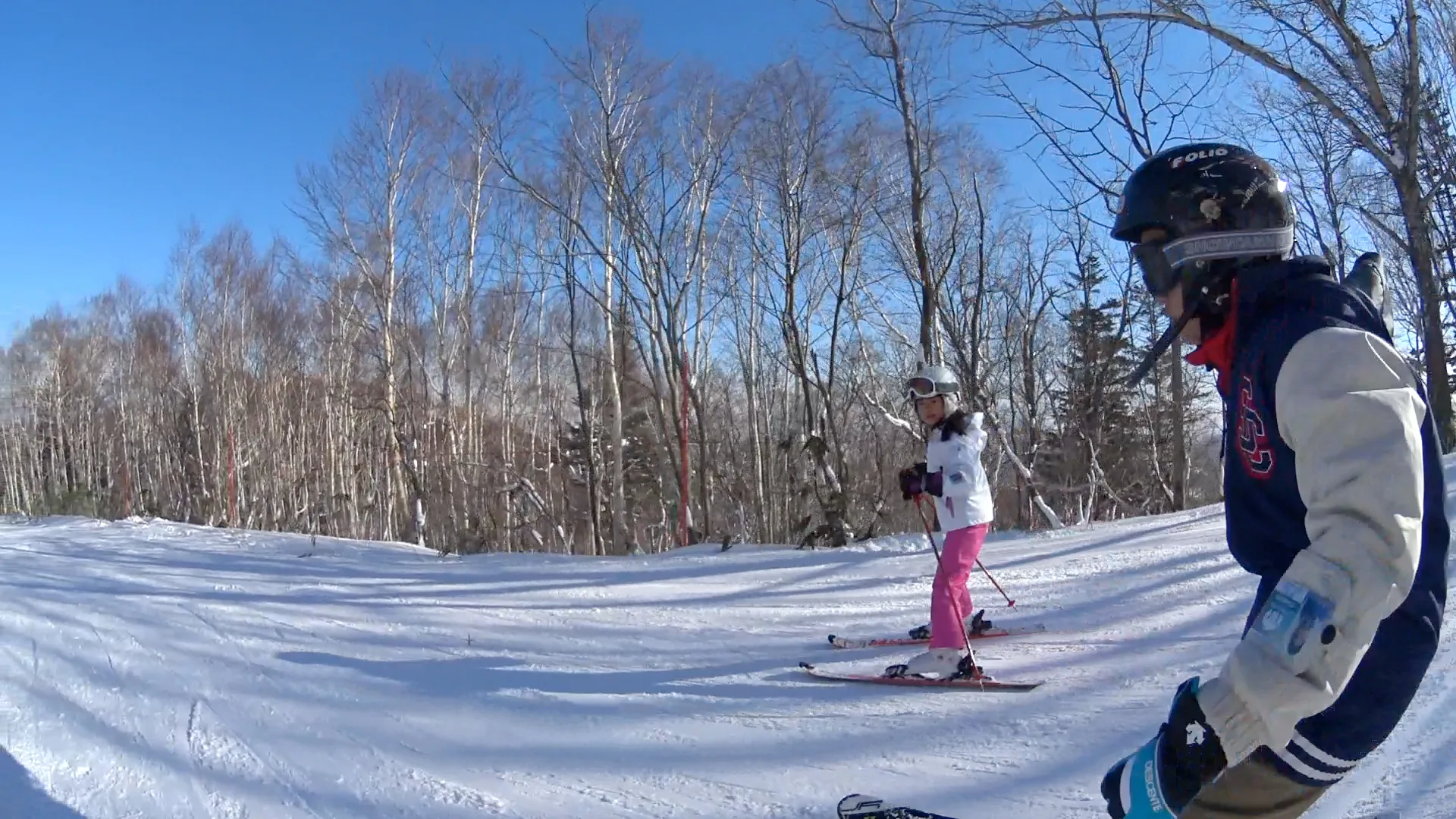 Zwei Skifahrerinnen auf einer verschneiten Piste zwischen Birken in Hokkaidō, Japan.
Photo: MIKI Yoshihito / Wikimedia Commons
Quick facts
- New Chitose and Asahikawa airports provide access to Hokkaido’s ski regions. Trains run less frequently outside the cities, so a bus or rental car may be needed for the final leg.
- Tohoku covers a large area: Aomori and Iwate are farther north, while Fukushima and Yamagata are quicker to reach from Tokyo.
- Tohoku is home to Hakkoda, known for backcountry experiences; Hachimantai, known for snow quality; and Appi Kogen, a large, versatile resort.
- Nagano links the Japanese Alps with destinations such as Hakuba, Nozawa Onsen, and Shiga Kogen. The Hokuriku Shinkansen runs via Nagano or Iiyama, with onward connections to the ski areas.
- Niigata’s Echigo-Yuzawa is about 80 minutes from Tokyo on the Joetsu Shinkansen; GALA Yuzawa is directly connected to a Shinkansen station.
- Gunma and other northern Kanto destinations can be reached from Tokyo by Shinkansen or express bus, and offer slopes for families and first-time ski days.
- Many ski areas around Takayama in Gifu are no more than about a 45-minute drive from the city center.
- In western Japan, ski areas by Lake Biwa can be reached from Kyoto by train in about 40 to 60 minutes, plus a connecting service; from Hiroshima, the bus ride to snowy slopes takes about two hours.
Hokkaido and Tohoku: Northern Japan and getting there
Hokkaido is a good fit for a trip where flying into one of the northern airports and arranging onward transport to the mountain towns are part of the plan. New Chitose and Asahikawa are the main gateways. Depending on the destination, western ski areas can be reached by airport bus, while more remote locations often require a rental car or an additional bus ride. Rural rail services are infrequent, making the final leg more important than it is on Honshu.
Tohoku is not a single resort zone but a vast region. Aomori and Iwate are farther north; Yamagata and Fukushima are quicker to reach from Tokyo. Hakkoda is known for backcountry skiing, Hachimantai for its snow, and Appi Kogen for its extensive trail network. In the region’s mountains, visitors are drawn to “snow monsters” (juhyo)—trees shaped by snow and ice. The area also has onsen, or hot springs, to enjoy after a day on the slopes.
Honshu: Alpine areas and fast rail connections
Nagano and the Japanese Alps combine vast mountain areas with traditional towns. Hakuba is known for its high-alpine slopes and several resorts that work together; Nozawa Onsen pairs a ski area with a historic hot-spring town. Shiga Kogen is an expansive interconnected ski area. The Hokuriku Shinkansen takes travelers from Tokyo to Nagano or Iiyama; a bus or transfer is needed for the final leg to the destination.
Niigata and the Echigo Mountains are especially appealing if you want to keep travel time from Tokyo short: the Joetsu Shinkansen reaches Echigo-Yuzawa in about 80 minutes. GALA Yuzawa has its own high-speed rail station right at the base building. Gunma and northern Kanto offer more destinations close to Tokyo; Shinkansen services and express buses also provide access to areas without convenient rail connections.
Gifu, Hokuriku, and western Japan
Gifu, Hida, and Hokuriku are a good choice if your trip is focused on the Takayama or Shirakawa-go area. Several ski areas are a short drive from Takayama. Gifu can also be reached via Nagoya and Chubu Centrair International Airport. The journey is therefore different from Shinkansen day trips to Niigata and Gunma.
Western Japan and Chugoku offer ski days within relatively easy reach of cities: trains run from Kyoto to the slopes by Lake Biwa, followed by shuttle buses to the lifts. From Hiroshima, ski areas can be reached by bus in about two hours. This makes the region a possible addition to a city break; the specific connection depends on the resort and seasonal timetable.
