
Leonessa between slopes, mountain trails and culture
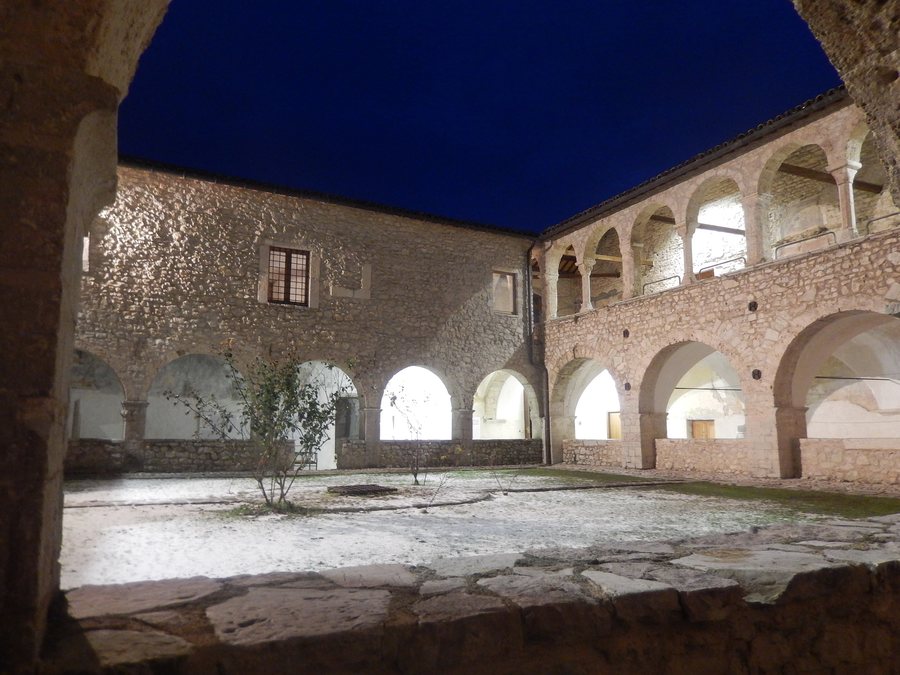 File:Leonessa (RI) Chiostro della Chiesa di San Francesco.jpg
Photo: Risa G WiCo18 via Wikimedia Commons, CC BY-SA 4.0
File:Leonessa (RI) Chiostro della Chiesa di San Francesco.jpg
Photo: Risa G WiCo18 via Wikimedia Commons, CC BY-SA 4.0
Leonessa combines a clear connection to winter sports with mountain trails, historic buildings and the Patata di Leonessa. Campo Stella is a winter sports destination with ski slopes, a chairlift and two drag lifts. At the same time, the mountain slopes around Leonessa offer hikes of varying difficulty from spring to autumn. When choosing accommodation for a skiing holiday, you can therefore distinguish between winter sports, seasonal trails and cultural points of interest without mixing the individual topics together.
Winter connection: Campo Stella and the lift structure
Campo Stella provides a specific connection to winter sports when classifying Leonessa in winter. There are ski slopes served by a chairlift and two drag lifts. This combination describes the structure of the winter sports offering more precisely than a general term such as mountain region or winter destination. For you, this primarily makes it clear that slopes and several types of lifts are part of the offering described.
The lift structure is also relevant when planning for a group with different expectations. At Campo Stella, a chairlift and two drag lifts represent different types of lifts. However, this does not allow Campo Stella to be assigned to either beginner or advanced level; nor is the distance from accommodation to the slopes specified. When choosing a ski hotel in Leonessa, it therefore remains important to distinguish between the town as a place to stay and Campo Stella as a winter sports offering.
Hiking from spring to autumn
The mountain slopes around Leonessa offer hikes of varying difficulty from spring to autumn. The range extends from challenging to easy trails. This variety is interesting for travel groups in which not everyone has the same level of athletic ambition: you can consider the possible activity according to each person’s level instead of assuming a uniform trail profile. At the same time, the seasonal classification remains clearly limited to the period from spring to autumn.
The Anello Vallonina, which is longer than 5 km, provides an additional point of reference. The length specification helps you compare different hiking options by their time and physical demands. It does not replace information about elevation gain, terrain or difficulty, but it makes the difference between a short outing and a longer route easier to understand. Accommodation in Leonessa thus provides a versatile planning framework that is not limited to winter.
Historic sites and religious architecture
Leonessa’s buildings also give a stay a clear cultural profile. The Fontana Farnesiana, also known as Fontana Margaritiana, is a Renaissance fountain. Ottavio Farnese and Margaret of Austria commissioned it in 1552. The fountain therefore combines a specific year with a Renaissance classification, without requiring any further conclusions about its current use or accessibility.
The Santuario di San Giuseppe da Leonessa is a Baroque building whose construction began in 1629. At the same time, it has a modern façade, allowing different architectural references to be recognized in this single building. The sanctuary also houses the body of Saint Giuseppe da Leonessa.
The town gates add further clearly datable elements. Porta Aquilana dates from the 13th century. Porta Spoletina dates from the 14th century and has a crenellated tower made of pink stone. The two buildings thus represent different historical periods and can be considered separately when exploring the cultural heritage. In the vicinity of Leonessa, there is also the Chiostro di San Francesco, classified as a palace.
Local history and regional cuisine
The Museo civico Mauro Zelli reconstructs rural life up to the 1950s. This temporal reference highlights the difference between medieval or early modern buildings and more recent everyday history. Those who do not view Leonessa exclusively through its slopes or hiking trails will therefore find another concrete way here to explore the development of the town and its way of life.
The Patata di Leonessa is also part of the local character. It is used for gnocchi and for Rescallata. For Rescallata, boiled potatoes are fried again in a pan together with pancetta and onions. The dish therefore describes not only a product but also a specific method of preparation.
Taken together, Leonessa is suitable for a differentiated choice: in winter, Campo Stella, with its ski slopes and three lift facilities, is the main focus. From spring to autumn, the mountain slopes and the longer Anello Vallonina become more prominent. Historic buildings, the Museo civico Mauro Zelli and the Patata di Leonessa complement this orientation with architecture, everyday history and cuisine. When choosing accommodation for a skiing holiday, you can therefore consider not only the sporting focus but also the other interests of your travel group, without presupposing a particular location or availability of accommodation.
If you would like to compare Leonessa with other destinations, you can also find Cantalice, Rieti and Belmonte In Sabina as additional points of interest for planning your trip.
For the broader travel overview: Province of Rieti.
Check prices, availability and amenities for your travel dates directly on Booking.com.
View accommodation and offersAdvertisement · Affiliate link to Booking.com
_Chiostro_della_Chiesa_di_San_Francesco.jpg)